university Portrait
With deep roots in its Lower Bavarian home region, Deggendorf Insitute of Technology has, since 1994, developed into one of the most successful new universities of applied sciences established in Bavaria during the 1990s. No one could have foreseen this success in its founding year. However, with its sights firmly set on the future, Deggendorf Institute of Technology has succeeded in doing just that: by gradually establishing attractive fields of study, complemented by an appealing range of continuing professional development programmes, intensive research activities and the transfer of knowledge and technology to the regional economy, by responding to economic and social trends, and by fostering regional and international contacts.
We are a university without boundaries
Today, over 9,600 young people are studying at the campuses in Deggendorf, Pfarrkirchen and Cham. 51.3 per cent of them come from all over the world to study in Lower Bavaria. Teaching focuses on the fields of business, engineering, computer science and health. Numerous Bachelor’s and Master’s programmes are offered in these fields, including in the area of continuing professional development. All degree programmes meet national and international quality standards. In addition to the main campus in Deggendorf, the DIT offers further excellent opportunities to obtain a Bachelor’s and/or Master’s degree at its campuses in Pfarrkirchen and Cham. Those wishing to study in English and in a multicultural environment will find what they are looking for, particularly at the European Campus Rottal-Inn and the Cham Campus.
A pioneer in knowledge and technology transfer
The university shares a strong bond with the town and the Bavarian Forest region. Whilst Deggendorf was a rather sleepy little town before the university was founded, it now presents itself as a young and modern place with a vibrant townscape that brings together different cultures and nationalities. The presence of the students is clearly felt. The town and the university have grown together. The Bavarian Forest also benefits from academic research. In 2009, the first of what are now 16 research campuses opened in Teisnach. With its ‘Technology Campus’ concept, the university is playing a clear pioneering role in collaboration with industry and local authorities. Together, they help to support companies in research, development and consultancy, thereby creating new opportunities for young, qualified people.
Down-to-earth, yet always open to new ideas
The DIT has always shaped its future clearly whenever it has seized existing opportunities and surprised people with extraordinary ideas and their swift implementation. In 2013, for example, the application for the title of ‘Technical University’ marked an important and successful milestone in its history. In the years that followed, DIT gradually refined its portfolio. In 2015, the Faculty of Applied Health Sciences was established, and six years later, this has brought DIT into the spotlight regarding the planned Lower Bavaria Medical Campus. The European Campus Rottal-Inn Faculty at the international campus in Pfarrkirchen far exceeded the expected student numbers. The eighth faculty, the Faculty of Applied Computer Science, is bringing innovative degree programmes such as Artificial Intelligence and Quantum Computing to life. Since 2021, Cham has been the DIT's third study location, complementing the range of English-taught degree programmes.
Creative, intelligent, responsible
This enormous growth necessitated an expansion of the university’s physical footprint. Over time, this has resulted in the creation of a ‘university mile’ stretching right into Deggendorf town centre. The DIT’s lecture theatres, laboratories and offices can now be found in former retail premises in the pedestrianised area. Of course, the DIT has not embarked on all these developments without a long-term goal. The vision is to have 10,000 students by 2030. In doing so, the DIT aims to provide the best possible services for prospective and current students. The university’s administration has been restructured since October 2022.
A family-like campus life
The atmosphere on campus is still very friendly. As a university town, Deggendorf offers many advantages. The distances between the campus, the town centre and the halls of residence are short and can easily be covered on foot. Thanks to its proximity to the Danube and the Bavarian Forest, there are numerous opportunities for leisure activities. The good transport links also make it easy to go on day trips throughout Bavaria. The moderate cost of accommodation and living are a further plus point for many students. The university itself also offers an extensive programme of events, including music festivals, concerts, theatre and student societies. Through the university sports programme, competitive athletes can take part in competitions across many sports, such as the Bavarian and German university championships. Student interest is high, and as a result, the DIT has won numerous titles in recent years. Student societies play an active role in shaping campus life. Over 20 societies covering various disciplines offer students the opportunity to get involved, make new friends and have fun.
Deggster – our mascot
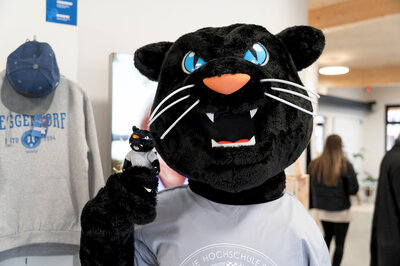
What's perfectly normal in sports may seem a little odd at a German university: the mascot. But Deggendorf Institute of Technology is ambitious to always play in the premier league, that's why it has a mascot too: The Deggster. With ggs instead of x, because he's quite a nice guy. Even if some may spontaneously mistake him for a tiger, the Deggster is actually a panther. That's because the (red) panther is the (only) heraldic animal of Lower Bavaria. Surprise, because many people would probably instinctively name the lion as THE Bavarian cat.
The Deggster has been around since 2021 - as a key fob and in real life. Well, almost. Because there is always a mysterious person at every event who slips into his two-metre tall, South American robe. Nice and cosy in winter, hot as hell in summer. Nevertheless, the Deggster is always friendly and, as a university icon, adorns countless selfies on all kinds of social networks in the western and eastern hemisphere. It is even rumoured that he became the most photographed personality in DIT history in his early years.
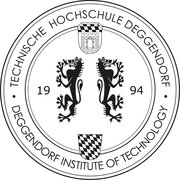
Perhaps for this reason - but we don't know for sure - the Deggster was also honoured with its own decorative seal. On it, it can be seen in a highly stylised form together with its blue colleague, which stands for Upper Bavaria as well as Lower Bavaria. And here it comes: both the blue and the red panther in elegant and sublime black. Which, by its very nature, is a better colour for the panther. The seal also honours the city of Deggendorf and the state of Bavaria with its coat of arms and diamond pattern. As befits a decidedly international university, the seal includes both its German and English names: ‘Technische Hochschule Deggendorf’ and ‘Deggendorf Institute of Technology’.
rankings, awards, certificates & memberships
WURI (World University Rankings for Innovation)-Ranking
2025:
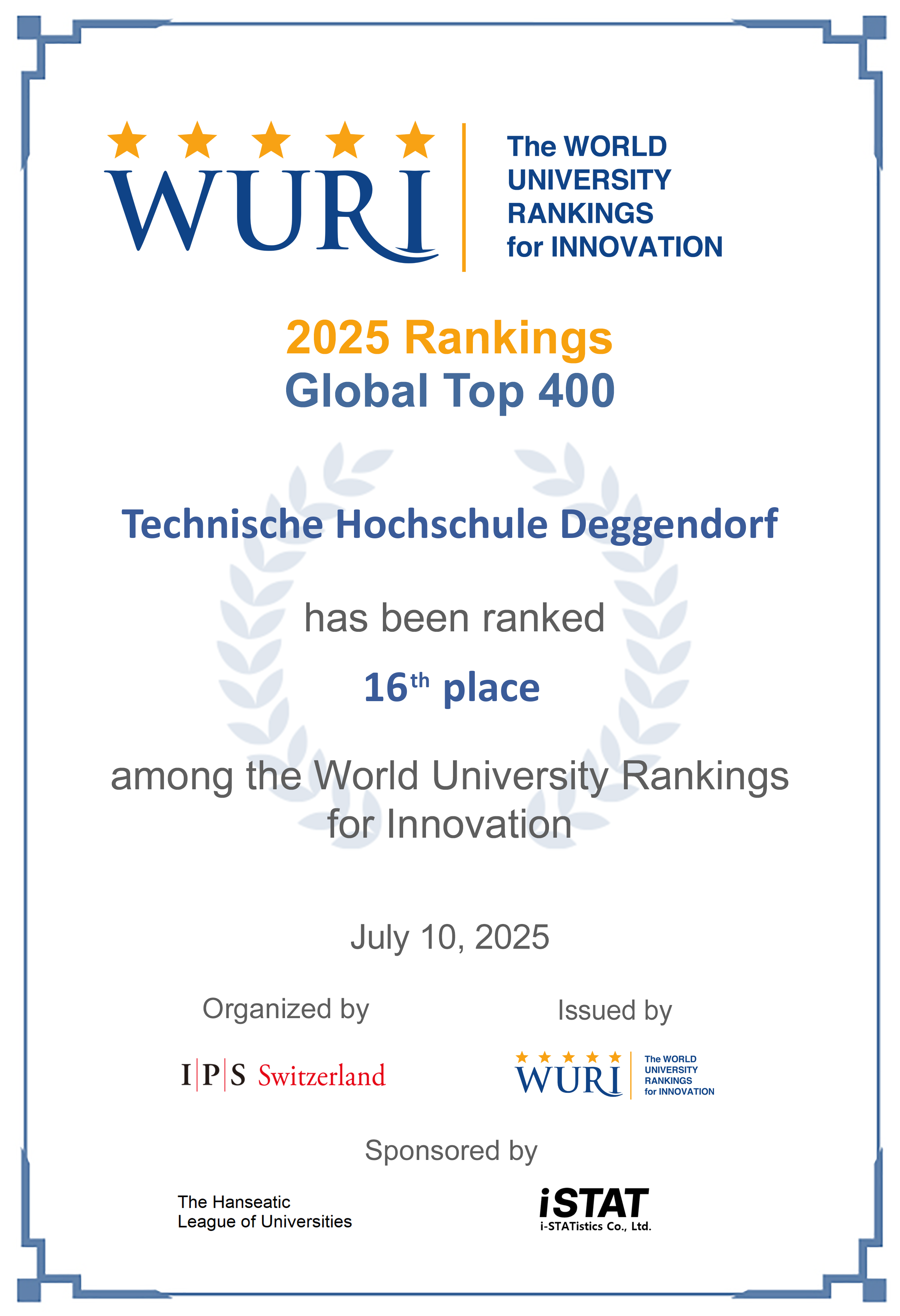
- No. 16 worldwide in the category "Global Top 400 Innovative Universities"
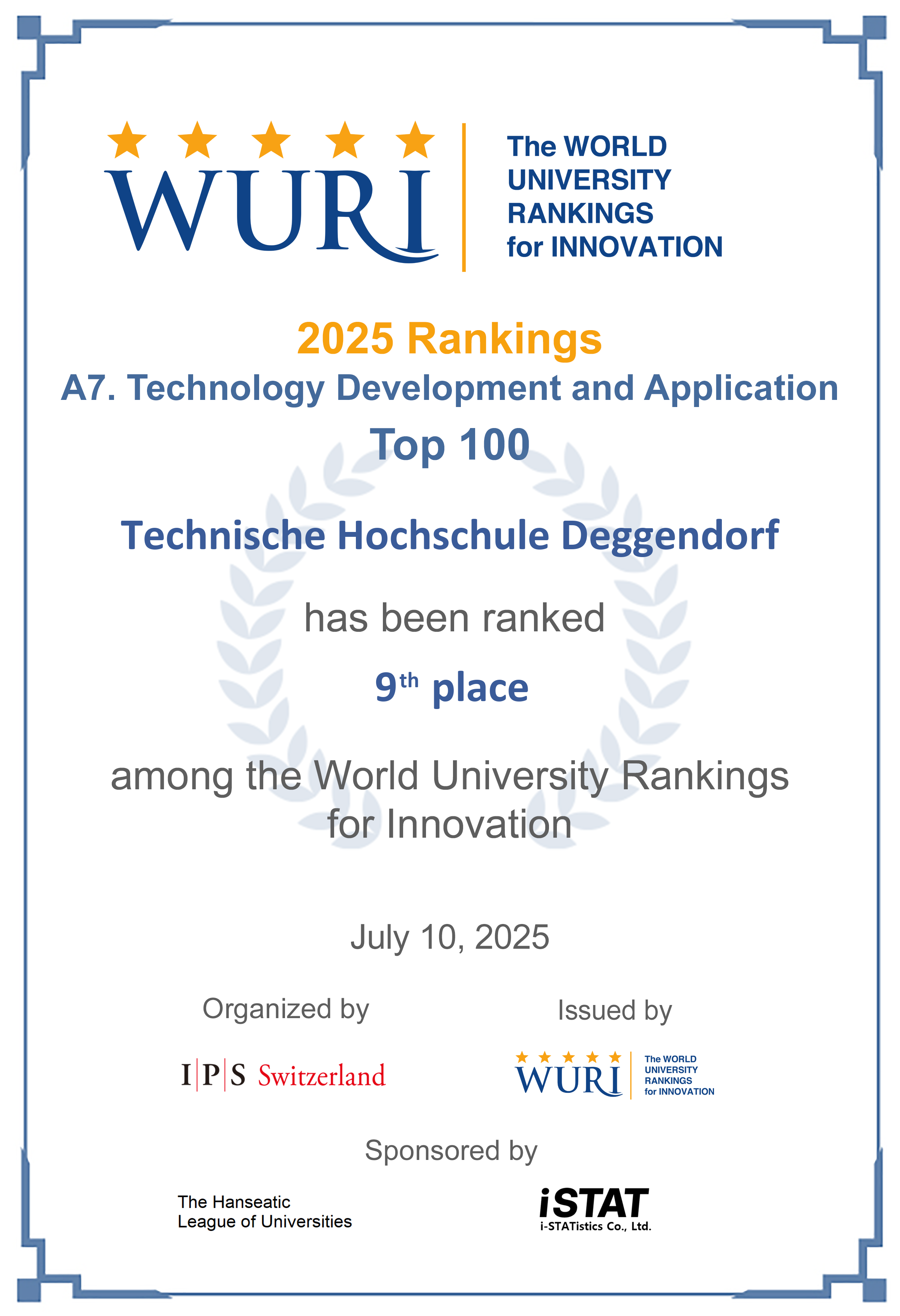
- No. 9 worldwide in the category "Technology Development and Application"
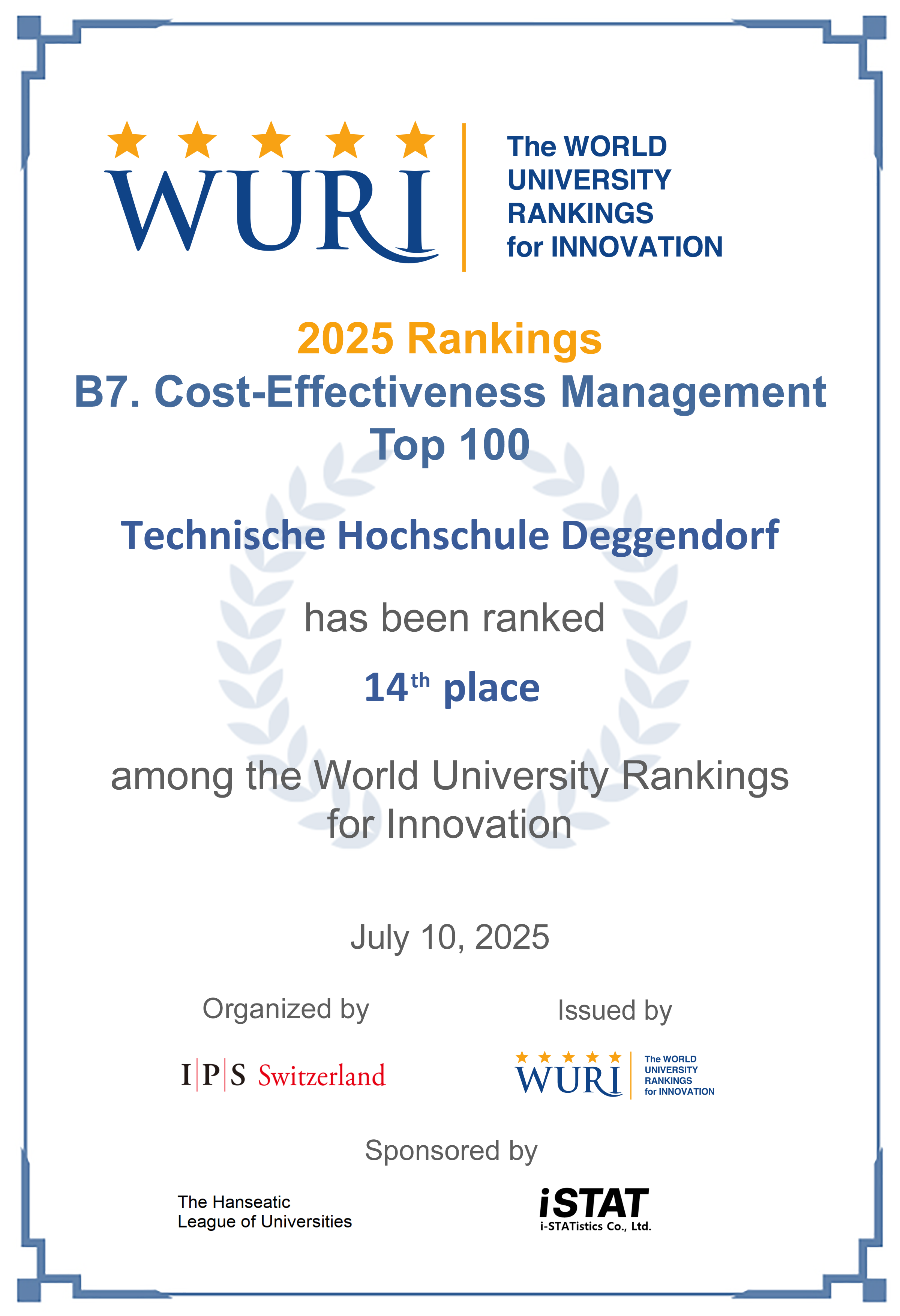
- No. 14 worldwide in the category "Cost-Benefit Management"
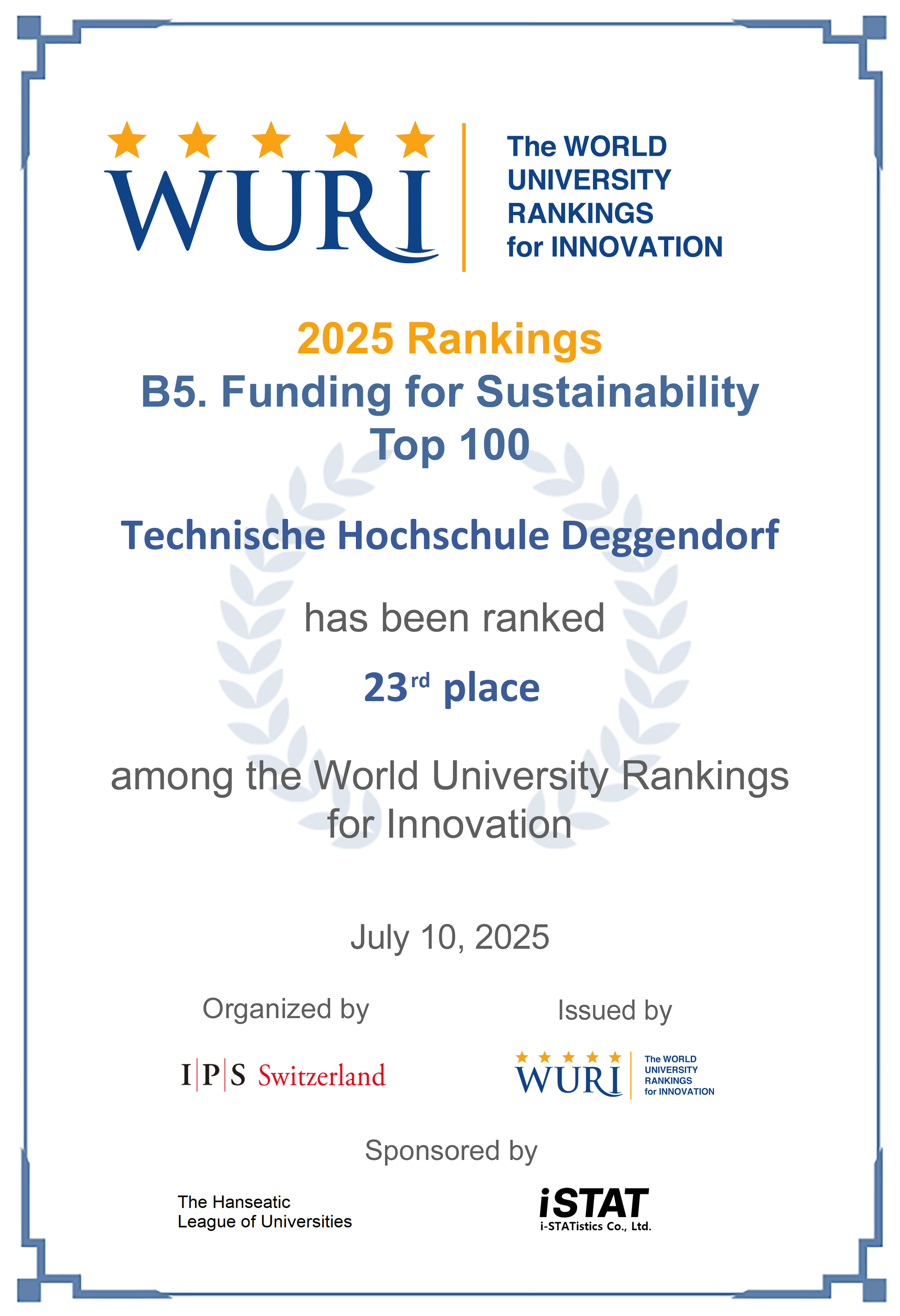
- No. 23 worldwide in the category "Empowering Professionals: Education for a Sustainable Tomorrow"
2024:
- No. 16 worldwide in the category ‘"Leadership"
- No. 20 worldwide in the category "Global Top 300"
- No. 24 worldwide in the category "Generative AI Application"
- No. 28 worldwide in the category "Student Mobility and Openness"
2023:
- No. 1 worldwide in the category „Entrepreneurial Spirit“
- No. 16 worldwide in the overall ranking of the most innovative universities
- Most innovative university in Germany
2022:
- No. 2 worldwide in the category „Entrepreneurial Spirit“
- No. 8 worldwide in the category „Crisis Management“
- No. 33 worldwide in the category „Industrial Application“
- No. 51 worldwide in the category „Student Mobility and Openness"
- No. 24 worldwide in the category „Real Impact"
2021:
- No. 5 worldwide in the category "Entrepreneurial Spirit"
- No. 7 worldwide in the category "Crisis Management"
- No. 29 worldwide in the category "Industrial Application"
- No. 29 worldwide in the overall ranking of the most innovative universities
2019:
- No. 8 worldwide in the category "Entrepreneurial Spirit"
- No. 26 worldwide in the category "Student Mobility and Openness"
- No. 43 worldwide in the overall ranking of the most innovative universities
CHE university rankings
2023/24 ranked as outstanding in:
- Business Administration
- International Management
- Tourism Management
- Organisational and Economic Psychology
- Industrial Engineering
- Business Informatics
2019/2020 ranked as outstanding in:
- Civil and Construction Engineering
- Electrical Engineering and Information Technology
- Mechanical Engineering
- Mechatronics
- Engineering Physics
2023: DIT is one of the best state universities in Germany according to the study "Deutschlands Beste" (Germany's Best) in cooperation with Focus and Focus Money.


- Certificate "Herausragende Ausbildungsleistung 2025" - IHK Niederbayern
- Award "Top-Arbeitgeber im Mittelstand 2024" (Top employer in the SME sector 2024)
- Award "Arbeitgeber der Zukunft" (Employer of the future) 2023
- European Society for Quality Research: International Diamond Price for Excellence in Quality 2023
- ACEEU Triple-E Award: #4 in Europe in "Young Entrepreneurial University of the Year" (From Technology to scale: Full 360° Mission)
- Prof. Peter Schmieder: Triple-E-Award „Male Entrepreneurial Leader of the Year“ 2022
- Proudr LGBTIQ+ Campus Index for Germany, Austria and Switzerland, 2021. Placed no. 4 with a result of 79,7%
- ESPA Innovation Award 2019
- Winner of the "Zwei-Länder-Preis" 2019
- Winner of U-Multirank award as top 25 worldwide in the category " Contact to work Environment" 2019
- Winner of U-Multirank award as top 25 universities worldwide in the category " International Orientation of Degree Programmes" 2019
- Winner of the MINTernational Best Performance Prize 2018
- Winner of the National Employer Prize for Education 2013



- The European Campus got certified in 2023 as bicycle-friendly employer
- E-Quality Label certificate, ensuring equal opportunities
- National Code of Conduct for German Universities certificate, regarding international students
- Heroes Alliance
- MINT Zukunft schaffen (STEM initiative)
- Affiliate member of the United Nations World Tourism Organization
- Member of the European University Association
- Member of Families in the University best practise club
- Hydrogen Alliance Bavaria
-
The European Campus Rottal-Inn is an academic institutional member with the following top professional societies in Digital Health:
- Healthcare Information and Management Systems Society (HIMSS)
- International Society for Telemedicine and eHealth (ISfTeH)
- International Medical Informatics Association (IMIA)
- European Federation for Medical Informatics (EFMI)





dit milestones
- 2026
- 2025
- 2024
- 2023
- 2022
- 2021
- 2020
- 2019
- 2018
- 2017
- 2016
- 2015
- 2014
- 2013
- 2012
- 2011
- 2010
- 2009
- 2008
- 2007
- 2006
- 2003
- 2002
- 2001
- 1999
- 1998
- 1997
- 1996
- 1994
- 1991
- Opening of the Campus Mainburg
- Opening of the Promotionszentrum NITRO
- Opening of the Campus Wörth-Wiesent
- Opening of the Campus Kemnath
- Opening of the BITZ Transformation Lab in Oberschneiding
- Opening of the Promotionszentrum DigiTech
- Prof. Waldemar Berg takes over as University President on 15 March
- Opening of the Technology Campus Vilshofen
- 10 years Technology Campus Grafenau
- Laying of the foundation stone for the extension in Cham
- Topping-out ceremony for the canteen extension
- University milestone: Opening of new facilities in the Veilchengasse in Deggendorf
- In June, the DIT awards the Anton Fink Science Prize for Artificial Intelligence for the first time
- 20 years of the Centre for Academic further education
- 8,324 students for the winter term 2021/2022
- Campus Cham becomes third study location at DIT
- Opening of the Bavarian Innovation and Transformation Centre (BITZ) Oberschneiding
- DIT receives system accreditation
- Opening of the Technology Campus Plattling
- Decision to open another Technology Campus in Vilshofen in 2022 with focus on cyber security
- DIT becomes the only university of applied sciences in Germany with a European Grouping for Territorial Cooperation (EGTC)
- 7,158 students for the winter term 2019/20
- Foundation of the Faculty of Applied Computer Science (AI)
- Establishment of the Faculty of European Campus Rottal-Inn (ECRI)
- Opening of the Technology Campus Parsberg-Lupburg
- Opening of the Technology Campus Hutthurm
- Opening of the Technology Campus Teisnach II
- DIT's 25th jubilee festival
- Opening of the Transfer Centre for Technology and Innovation on 7 June as the fifth building in a major extension project
- Prof. Dr. Peter Sperber is elected to carry on his presidentship for the second successive term
- The new campus building for TC Grafenau is opened
- Student population in Oct 2016: 6,068
- Founding of the European Campus Rottal-Inn in Pfarrkirchen, courses start on 1 Oct 2015
- Technology and Study Centre Weißenburg is opened
- Faculty of Applied Healthcare (AGW) is founded
- Major campus extension in Deggendorf is opened on 26 Oct 2014, including 4 new buildings over an extended area of 5,700 sqm
- Student population in Oct 2013: 5,061
- Federal President Joachim Gauck visits Deggendorf as students help locals during a flood catastrophy
- New "THD" and "DIT" logos

- Awarding of the new titles "Technische Hochschule Deggendorf" and "Deggendorf Institute of Technology"
- Technology Campus Grafenau is opened
- Heathcare Campus Bad Kötzting is opened
- Technology Application Centre Spiegelau is opened
- Prof. Dr. Peter Sperber is elected to be the University President, starting March 2012
- Faculty of Naturwissenschaften und Wirtschaftsingenieurwesen (NuW) is founded
- New “HDU“ logo is created for "Hochschule für angewandte Wissenschaften Deggendorf" and "Deggendorf University of Applied Sciences"
- Campus Schloss Mariakirchen is opened

- Student population in Oct 2010: 4,052
- Technology Campus Cham is opened
- Technology Campus Teisnach is opened
- Technology Campus Freyung is opened
- Visit from Bundeskanzlerin Angela Merkel
- Student population in Oct 2007: 3,159
- German degree titles are adjusted to Bachelor und Master titles for international transparency
- Faculties are established
- Student population in Oct 2002: 2,146
- The Professional Education Centre is established
- “Fachhochschule Deggendorf“ logo is redesigned

- Innovation and Technology Campus Deggendorf (ITC 1) is opened
- Student population in Oct 1999: 1,121
- Development of the R&D labs, cooperative doctorates
- On 1 Oct 1999 virtual teaching methods begin (IT compact course, E-Learning)
- “Fachhochschule Deggendorf“ logo is developed

- On 24 April 1997 a foundation stone for the new campus is laid
- Prof. Dr. Reinhard Höpfl is elected to be University President
- The university is founded with the title of "Fachhochschule Deggendorf - Hochschule für Technik und Wirtschaft"

- On 26 Nov 1991 the Bavarian Council of Ministers decide to establish a university in Deggendorf
Vision 2030
stats & facts
Stats and facts gives you an overview of various key figures, evaluated regularly on fixed key dates. Please direct any enquiries to pressestelle@th-deg.de.
9,624 Students
207 Professors
978 Staff members
56 Doctoral candidates
56 Bachelor degree programmes
40 Master degree programmes
Student numbers as of 01.12.2025
Staff numbers as of 01.10.2025
dit's mission and guiding principles
For over 30 years, Deggendorf Institute of Technology has been a reliable partner for students, companies, schools, research institutions, and municipalities while also providing a professional home for its staff.
We stand for practice-oriented teaching, applied research and development, and the transfer of knowledge to society.
We are aware of the challenges of our time and align our actions accordingly.
We are characterised by mutual respect, openness to the world, cultural diversity, dynamic development, democratic values, equal opportunities, and diversity.
As a responsible actor and key driver in the region, DIT significantly contributes to the development of the innovation ecosystem. We build bridges between national and international research institutions, municipalities, companies, and start-ups, actively shaping the future of our region.
We are pioneers
In teaching, further education, applied research, and start-up support, we are pioneers in the higher education landscape. The openness to new target groups and the continuous dialogue with society, politics, and business shape the development of our university. Innovative teaching and learning environments and the pursuit of excellence in research are key to our success.
Our principle is continuous improvement
We provide our students with excellent conditions through practice-experienced scientists and service-oriented administration to bring out their individual potential. We align our teaching and learning offerings with the needs of the economy and continuously develop them further.
As part of our excellent offerings in teaching, further education, research, and start-up support, we promote social and professional skills as well as entrepreneurial thinking and action.
We actively shape the future
The challenges of our time are our guide and drive. Our daily actions shape the future of our region and that of our students and staff. We are always aware of this great responsibility.
Our goal is to actively shape the future. In developing new study programmes, setting research priorities, and promoting founders, we rely on the highest quality and future orientation.
We create working conditions that enable our employees to actively shape the future. We place great emphasis on careful selection and qualification of our staff to ensure they are up to future challenges and contribute positively to the university's development.
The Teaching Mission Statement reflects the THD’s self-image and the institution-wide standards for teaching. It serves as a guide for all members of the university community – including teaching staff, students, and academic and non-academic staff – on the kind of teaching and learning that the THD embodies. The following principles, which are transparent and aligned with the university’s mission statement, describe the teaching ideals that the THD stands for. In doing so, educational goals such as subject-specific competence, methodological competence, social competence and personal competence are systematically promoted.
1. Quality of life and the student experience
Your time at THD is the best time of your life. We support our students in balancing their studies, work and leisure time to achieve a healthy work-life balance and a high quality of life. To this end, we develop and trial flexible and innovative course formats and employ a wide range of teaching methods. Together with our students, we shape our campuses into places that invite both social learning and relaxation. In addition, we organise festivals and events and promote sporting and cultural activities with and for our students. The aim is to support students’ personal development so that they can organise their studies independently whilst also getting involved in the social life of the university.
2. Internationality and Integration
With students from over 100 countries, THD’s campuses are among the most international in Germany. We thus offer unique intercultural learning environments and prepare our students for the challenges of our globalised world through international degree programmes, study groups and modules. In doing so, we place particular emphasis on ensuring that international students, as well as national and regional students, feel at home and welcome at THD. By expanding team-building initiatives, we actively counteract exclusion and foster a sense of community. We guide, advise and support our students from the moment they arrive at THD right through to their successful job applications. The focus is on developing intercultural sensitivity and the ability to act responsibly within diverse and collaborative teams.
3. Practical and needs-based training
As a training partner in Eastern and Lower Bavaria, we are particularly committed to providing training that is specifically tailored to the needs of businesses in our region. We regard practice- and needs-oriented training as our core mission. International students are introduced to companies at an early stage through, amongst other things, intensive language courses and dual study programmes. This results in excellent employment opportunities for our students both within the region and far beyond. The focus is on acquiring specialist and methodological skills that directly prepare students for the demands of the economy and the labour market.
4. Applied Research, Knowledge Transfer and Start-ups
Compared to other universities, the THD stands out for its research strength, as well as its impact and experience in the field of start-ups. This profile is reflected in the teaching and additional programmes offered to our students. The Master’s programmes, in particular, are closely integrated with the research expertise of the Technology Campus and its research groups, offering excellent starting points for an academic career and a subsequent PhD programme. Students interested in start-ups will find a start-up-oriented environment in the form of course content and a wide range of additional and support services. The aim is to strengthen research-based learning, unleash innovative potential and foster confidence in one’s own entrepreneurial creativity.
5. Quality
THD is constantly working to develop a consistent understanding of quality in teaching. Through entrance examinations, we admit the most suitable candidates, who can then study at THD in an attractive and performance-oriented learning environment. All teaching staff are involved in the process of continuous quality improvement. We regularly measure and evaluate the quality of our teaching and, based on these results, develop our teaching formats, content and methods in a targeted manner. The focus is on the continuous improvement of teaching quality to enable an effective and motivating study experience.
strategies & Plans
Like all Bavarian universities, Deggendorf Institute of Technology has concluded a framework agreement for the years 2023 - 2027 with the Bavarian State Ministry of Science and the Arts. The fields of action described therein and their implementation serve to sharpen the strategic profile of the university and its specific focus. The interim report as at 30 June 2025 can be viewed here.
Whether in business, everyday life or at universities, AI will shape key areas of our lives in the coming years. Teaching and learning, too, are on the cusp of an exciting transformation – bringing new opportunities for students, lecturers and the entire educational landscape.
At our university, we are harnessing the opportunities offered by digital transformation: for innovative teaching formats, personalised learning pathways and future-oriented education.
Developments in the field of artificial intelligence are progressing rapidly – and our strategy is evolving alongside them. The AI strategy for teaching is based on the ‘AI Guidelines for University Teaching’ and forms part of DIT's overall AI strategy.
At DIT, the AI strategy for teaching is continuously being refined: through dialogue with teaching staff, via new formats for exchange, and under the guidance of the responsible AI committee. The AI strategy is therefore not a rigid concept, but an adaptable framework that grows dynamically alongside technological progress – always with the aim of making teaching and learning fit for the future.
The claim to be the most international university in Bavaria comes with the responsibility not only to live internationalisation together on a daily basis, but also to constantly put it to the test, to develop it further and to always keep our finger on the international pulse.
This idea naturally also underlies the current internationalisation strategy:
The strategic direction and profile set out in the mission statement describe the university’s impact in the region and beyond, for its various internal and external stakeholders. It forms the basis for the target agreements with the Bavarian State Ministry of Science and the Arts (BayStMWK) and also serves as the starting point for this transfer strategy.
Deggendorf Institute of Technology (DIT) considers it its responsibility to offer all employees, teaching staff and students an environment that stands for openness, equal opportunities, acceptance, inclusion, and freedom from discrimination. As DIT has a share of ca. 35% international students, it is even more important to establish a culture in which everyone feels included, integrated, and accepted. We see diversity as an opportunity and as the future, which is why we want to offer every single person the same opportunities to develop to the best of their abilities at DIT. This also includes breaking down existing barriers, exclusion mechanisms and discrimination, effectively. Our family-friendly university community stands for equal opportunities regardless of gender, sexual orientation, origin, and religion. We promote cultural diversity, as well as the physical and mental health of our students and employees. Therefore, we commit ourselves and all members to a respectful and sensitive interaction with each other.